As a parent, you want to do everything you can to protect your child’s health, including their teeth. Even with regular brushing and flossing, some areas of the mouth are harder to keep clean, especially for children. This is where a dental sealant can make a meaningful difference. Dental sealants are a safe, effective, and parent-approved way to help prevent cavities in children and teens, particularly on the back teeth where decay is most common. At Dr. Camps Pediatric Dental Center in Silver Spring, we often recommend sealants as part of a strong preventive care plan designed to keep young smiles healthy for years to come.
A dental sealant is a thin, clear or lightly shaded plastic coating that is applied to the chewing surfaces of the back teeth, specifically the premolars and molars. These teeth have deep grooves and pits that easily trap food particles and bacteria. According to the Centers for Disease Control and Prevention, about four out of five cavities in children occur in the back teeth. Sealants work by filling in those grooves, creating a smooth surface that is easier to clean and less likely to collect plaque.
Once applied, the sealant acts as a protective shield. It blocks food, plaque, and acid from settling into the grooves where a toothbrush cannot always reach. This simple layer of protection can significantly reduce the risk of tooth decay during the years when children are most cavity-prone.
Children are still developing good oral hygiene habits, and even with supervision, brushing may not always be thorough. Back teeth erupt around age six and again around age twelve, and these new teeth are especially vulnerable during their early years in the mouth. The American Dental Association notes that newly erupted permanent molars have softer enamel at first, making them more susceptible to decay.
Diet also plays a role. Many common childhood snacks contain carbohydrates and sugars that feed cavity-causing bacteria. When these sugars remain in the grooves of molars, acids form and begin to weaken the enamel. A dental sealant provides extra protection during this high-risk period.
Dental sealants are one of the most effective preventive tools in pediatric dentistry. The CDC reports that sealants can prevent up to 80 percent of cavities in the back teeth for the first two years after placement. They continue to protect against about 50 percent of cavities for up to four years and often longer with proper care.
The ADA supports the use of sealants for children and teens, citing strong evidence that they significantly reduce decay when placed early and monitored regularly. For parents, this means fewer cavities, fewer fillings, and fewer stressful dental visits related to tooth pain.
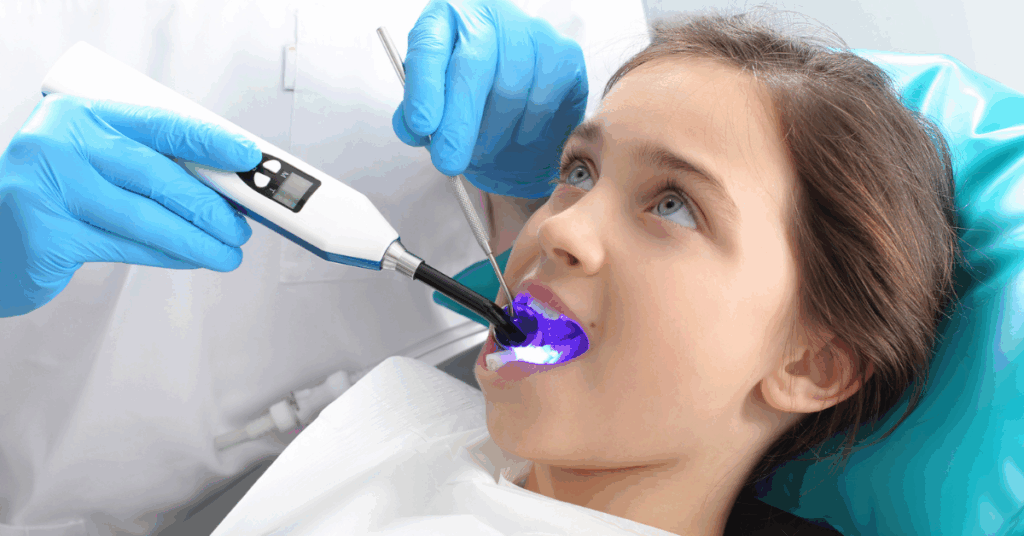
One of the most common questions parents ask is whether getting a sealant is uncomfortable. The good news is that the process is simple and painless.
Here is what typically happens during a sealant appointment:
The entire process takes just a few minutes per tooth. There is no drilling, no needles, and no removal of tooth structure. Most children tolerate it very well, even those who feel nervous about dental visits.
Sealants are usually recommended as soon as permanent molars erupt. For most children, this happens in two stages:
Applying a sealant soon after these teeth come in offers the greatest protection, before decay has a chance to start. In some cases, sealants may also be recommended for primary teeth if a child is at high risk for cavities.
At Dr. Camps Pediatric Dental Center, we evaluate each child individually. Factors such as cavity history, oral hygiene habits, diet, and tooth anatomy all help determine the right timing for sealants.
Yes. Dental sealants have been used for decades and are considered safe and effective by leading health organizations. The materials used are designed for dental use and are carefully applied by trained professionals. Research supported by the CDC and ADA shows that the benefits of sealants in preventing cavities far outweigh any potential risks.
Parents can feel confident knowing that sealants are a well-studied, widely recommended preventive treatment.
Sealants can last several years with proper care. During routine dental checkups, your child’s dentist will monitor the condition of the sealants to make sure they remain intact. If a sealant becomes worn or chipped, it can often be repaired or replaced easily.
Good oral hygiene habits help extend the life of sealants. Regular brushing with fluoride toothpaste, flossing, and professional cleanings all play a role in keeping teeth and sealants in good shape.
While sealants provide strong protection, they are not a substitute for daily oral hygiene. They work best as part of a complete preventive plan that includes:
Combining sealants with these habits gives children the best chance at avoiding cavities and developing healthy routines that last into adulthood.
Choosing where your child receives dental care matters. At Dr. Camps Pediatric Dental Center, our focus is on creating positive dental experiences while delivering high-quality preventive care.
Families choose our practice because we offer:
Our goal is to protect your child’s smile while building trust and confidence at every visit.
Preventing cavities early can have long-term benefits for your child’s oral health. Cavities in childhood often lead to fillings, crowns, or even extractions, which can affect how adult teeth come in. By reducing the risk of decay, sealants help preserve natural tooth structure and support healthy development.
Children who grow up with fewer dental problems often feel more comfortable visiting the dentist as adults. Preventive care today can lead to healthier smiles and fewer dental concerns later in life.
If your child is around age six or older and has permanent molars, it is a good time to ask about sealants. Even if those teeth have been in place for a while, sealants may still be an option if there is no decay present.
During a routine exam at Dr. Camps Pediatric Dental Center, we are happy to evaluate your child’s teeth and discuss whether sealants are a good fit. Our team takes the time to explain options clearly, so you can make informed decisions with confidence.
Dental sealants are a simple step that can make a lasting difference in your child’s oral health. If you would like to learn more or schedule an appointment, we invite you to visit Dr. Camps Pediatric Dental Center at 12520 Prosperity Drive, Suite 300, Silver Spring, MD 20904. Our friendly team is here to answer your questions, guide you through preventive options, and help protect your child’s smile at every stage.